๐Ÿงฆ Behind the Socks

From Ramie Field to Your Feet

7 steps. Zero shortcuts. See how our premium ramie blend socks are made โ€” from raw fiber harvesting to the final product on your feet.

๐Ÿ“‹ Company Profile

Our Production Workflow

Every pair of Little Tail socks goes through 7 rigorous steps โ€” because quality isn't accidental.

Ramie Harvesting - harvesting ramie fibers from the field
Step 01

Ramie Harvesting

We source premium ramie (Boehmeria nivea) from trusted farms. The stalks are harvested, and the outer bark is stripped to extract the raw fibers โ€” the first step in creating nature's most breathable material.

๐ŸŒฟ Raw Material Sourcing
Sun Drying Ramie - natural drying process
Step 02

Sun Drying

After harvesting, ramie fibers are spread out and sun-dried naturally. This traditional process preserves the fiber's natural antibacterial properties and prepares it for the degumming stage. No artificial heat โ€” just nature doing its work.

โ˜€๏ธ Natural Processing
Degumming Workshop - removing gum from ramie fibers
Step 03

Degumming Workshop

Ramie fibers contain natural gum that must be removed. In our degumming workshop, fibers go through a controlled process to extract clean, soft ramie โ€” ready for spinning. This is where the magic starts.

๐Ÿญ Clean Fiber Extraction
Spinning Workshop - ramie fibers spun into yarn
Step 04

Spinning Workshop

Clean ramie fibers are blended with Lyocell, Cotton, Spandex, and Acrylic โ€” then spun into premium yarn. Our spinning machines ensure consistent thread quality, setting the foundation for durable, comfortable socks.

๐Ÿงต Yarn Spinning
Spinning & Carding detail - fiber preparation
Step 05

Carding & Preparation

Before spinning, fibers go through carding machines that align and soften the blend. This step ensures the yarn is smooth, uniform, and free of impurities โ€” critical for the comfort of the final sock.

โš™๏ธ Fiber Preparation
Dyeing Workshop - dyeing ramie yarn
Step 06

Dyeing Workshop

Once spun, the yarn goes to our dyeing workshop. We use eco-friendly dyes that bond deeply with ramie fibers โ€” ensuring vibrant, fade-resistant colors that last through countless washes.

๐ŸŽจ Eco-Friendly Dyeing
Sock Production - knitting ramie blend socks
Step 07

Sock Knitting & Production

The final step โ€” our knitting machines transform the dyed ramie blend yarn into finished socks. Each pair is then inspected for quality before packaging. From field to feet, every step is in our control.

๐Ÿงฆ Finished Product

Lab-Tested. Buyer-Ready.

Every production run is backed by third-party test reports. We verify fiber content, antibacterial performance, moisture-wicking, and safety compliance before any order leaves our facility.

45.9%
Ramie fiber content
99%
S. aureus inhibition
GB/T 20944.3
Level 4
Moisture-wicking
GB/T 21655.2
ND
Formaldehyde
<20 mg/kg
Test Item Standard Requirement Result
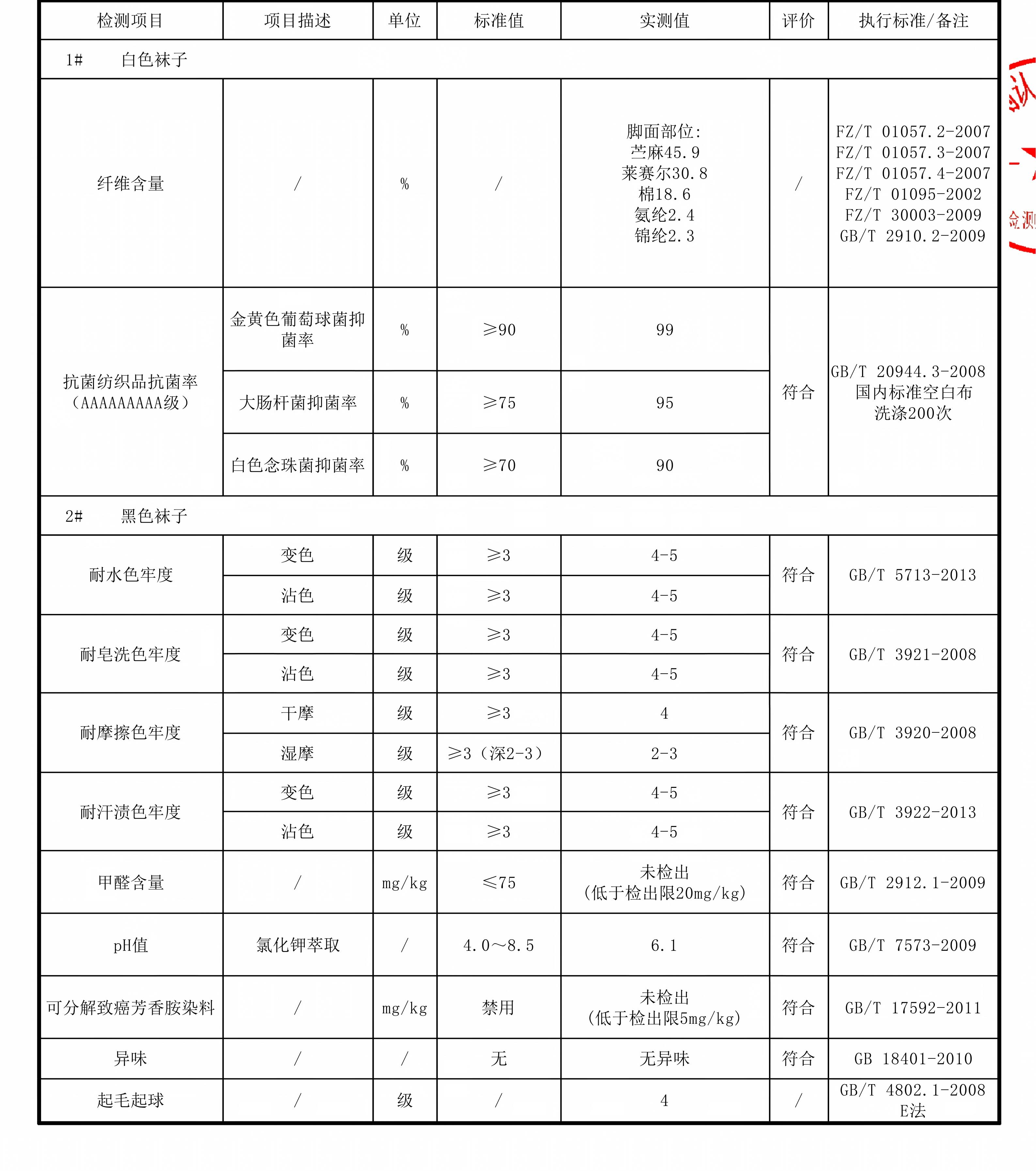
Fiber blend FZ/T 01057, GB/T 2910.2 As specified Ramie 45.9%, Lyocell 30.8%, Cotton 18.6%, Spandex 2.4%, Nylon 2.3%
Antibacterial โ€” S. aureus GB/T 20944.3-2008 โ‰ฅ 90% 99%
Antibacterial โ€” E. coli GB/T 20944.3-2008 โ‰ฅ 75% 95%
Antibacterial โ€” C. albicans GB/T 20944.3-2008 โ‰ฅ 70% 90%
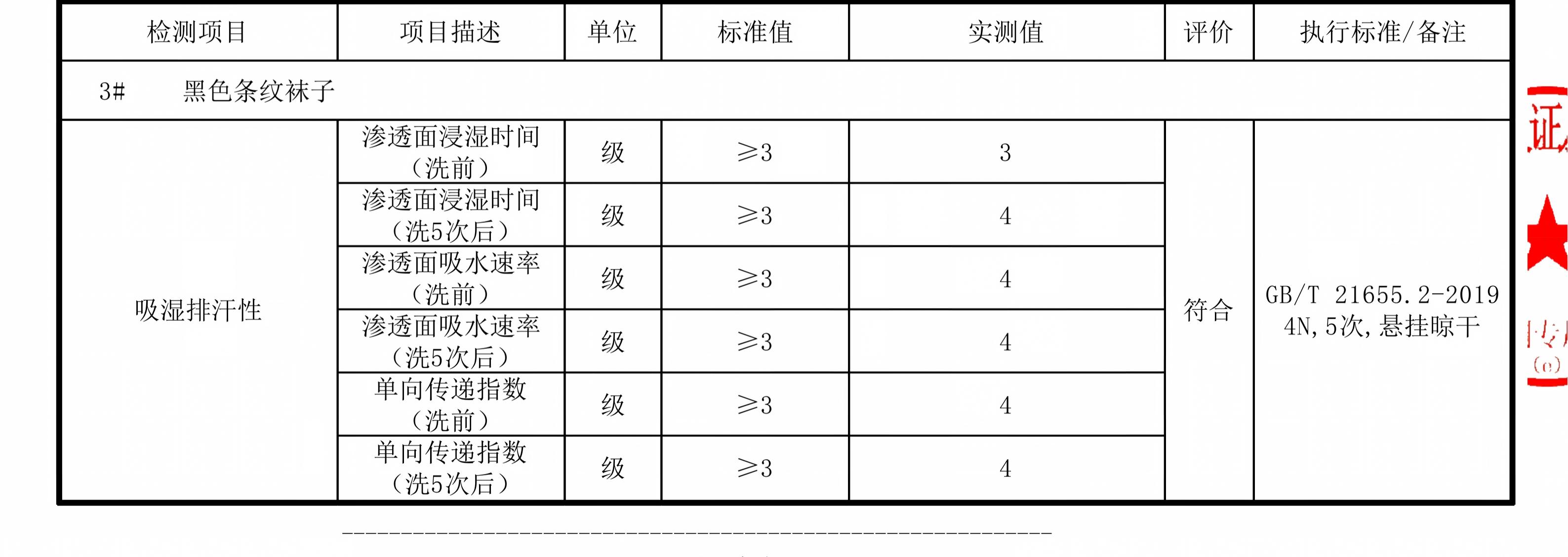
Moisture-wicking (after 5 washes) GB/T 21655.2-2019 โ‰ฅ Level 3 Level 4
Color fastness GB/T 5713, GB/T 3921 โ‰ฅ 3 4โ€“5
Formaldehyde GB/T 2912.1-2009 โ‰ค 75 mg/kg Not detected (<20 mg/kg)
pH value GB/T 7573-2009 4.0 โ€“ 8.5 6.1
Carcinogenic amines GB/T 17592-2011 Prohibited Not detected

Original Test Reports

Click to view full Chinese test certificates.

Fiber content and antibacterial test report
๐Ÿ“„ Fiber Content, Antibacterial & Safety Tests
Moisture wicking and perspiration test report
๐Ÿ“„ Moisture-Wicking & Perspiration Tests

Want to See the Production Line?

We can arrange a visit to our partner production facilities.
Request a sample or schedule a tour โ€” no obligation.

๐Ÿ“ฉ Send Inquiry Request a Visit